Note: The relative recovery capabilities of various inorganic acids are approximately as follows: hydrochloric acid ≥ nitric acid > sulfuric acid > hydrofluoric acid > phosphoric acid
 Aluminum profile anodizing process waste acid
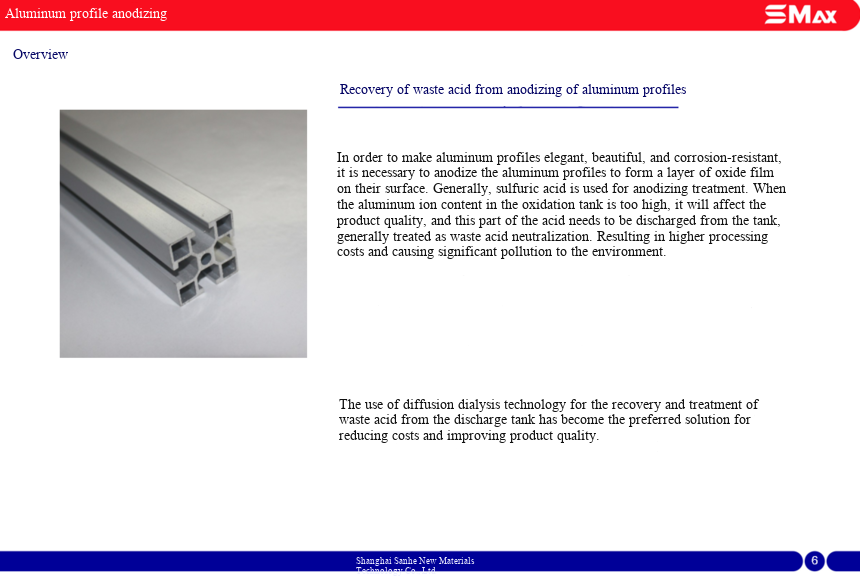
Anodizing is a method of surface treatment for aluminum profiles. It forms a protective film on the surface of the profiles, thereby enhancing their wear resistance and corrosion resistance.
Question:
For every 1 ton of profile produced, 50 kg of acid (98% sulfuric acid) is used. During the production process, as the concentration of A13+ ions in the solution increases, it directly affects the conductivity of the solution and the quality of the coating layer. Usually, the only way to deal with this is to stop production and discharge the solution, which not only affects production efficiency but also leads to acid waste, resulting in high costs for neutralization and solid waste disposal.

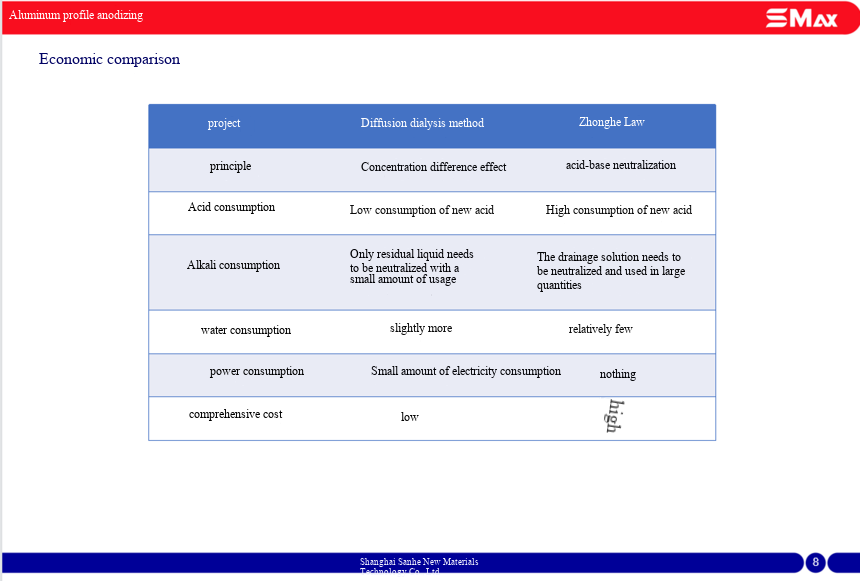
Solution:
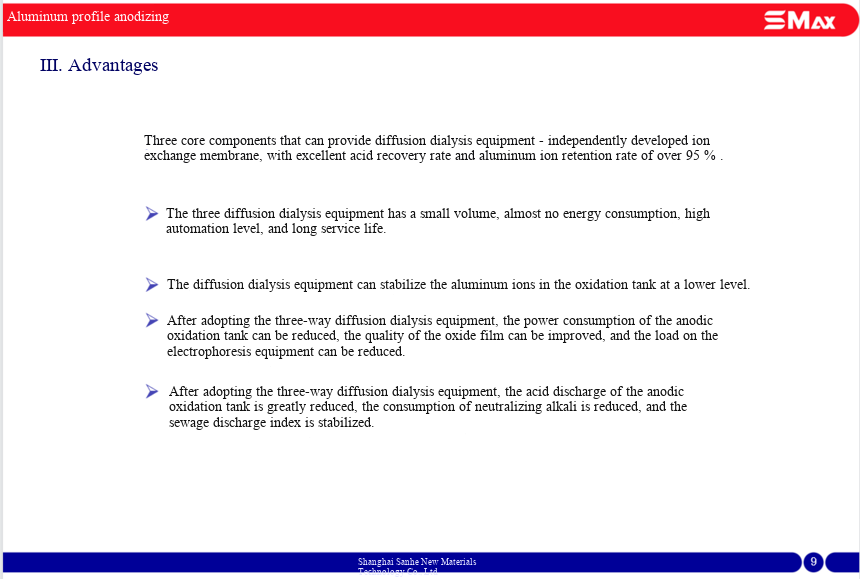
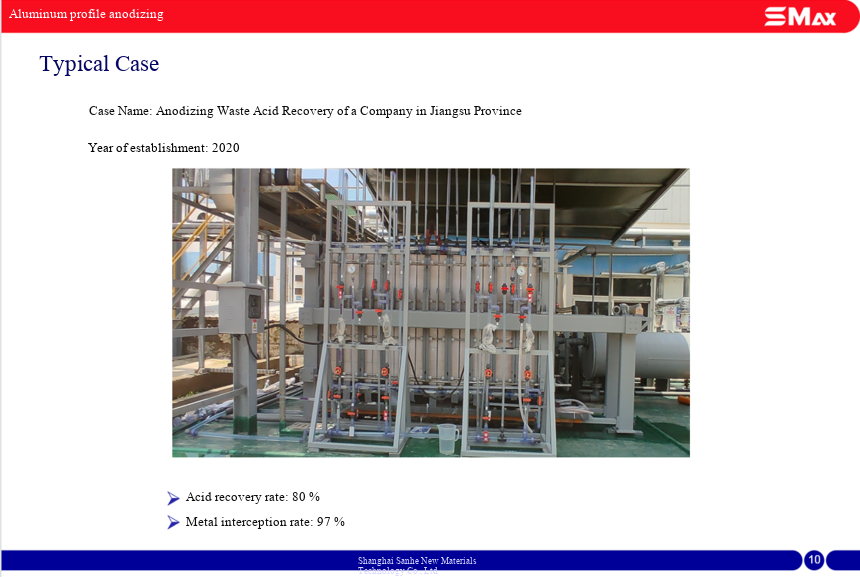
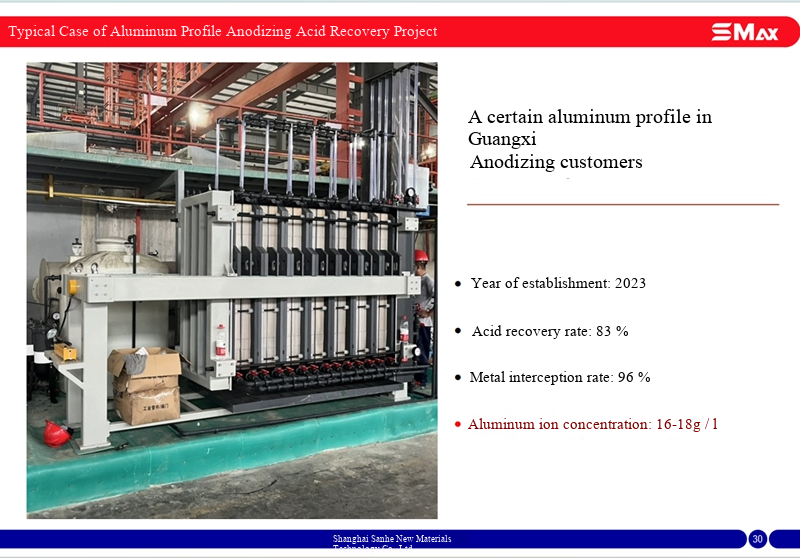
Use the diffusion dialysis method for treatment, recovering over 80% of the waste acid;
Significantly reduce the usage of waste acid, the cost of alkali neutralization and solid waste disposal:
Effectively control the concentration of A13+ at a stable equilibrium state, thereby ensuring the product quality of aluminum profiles.
Pre-treatment:
Remove suspended solids, remove oil